Sustainable Micro Farming Starter Kit
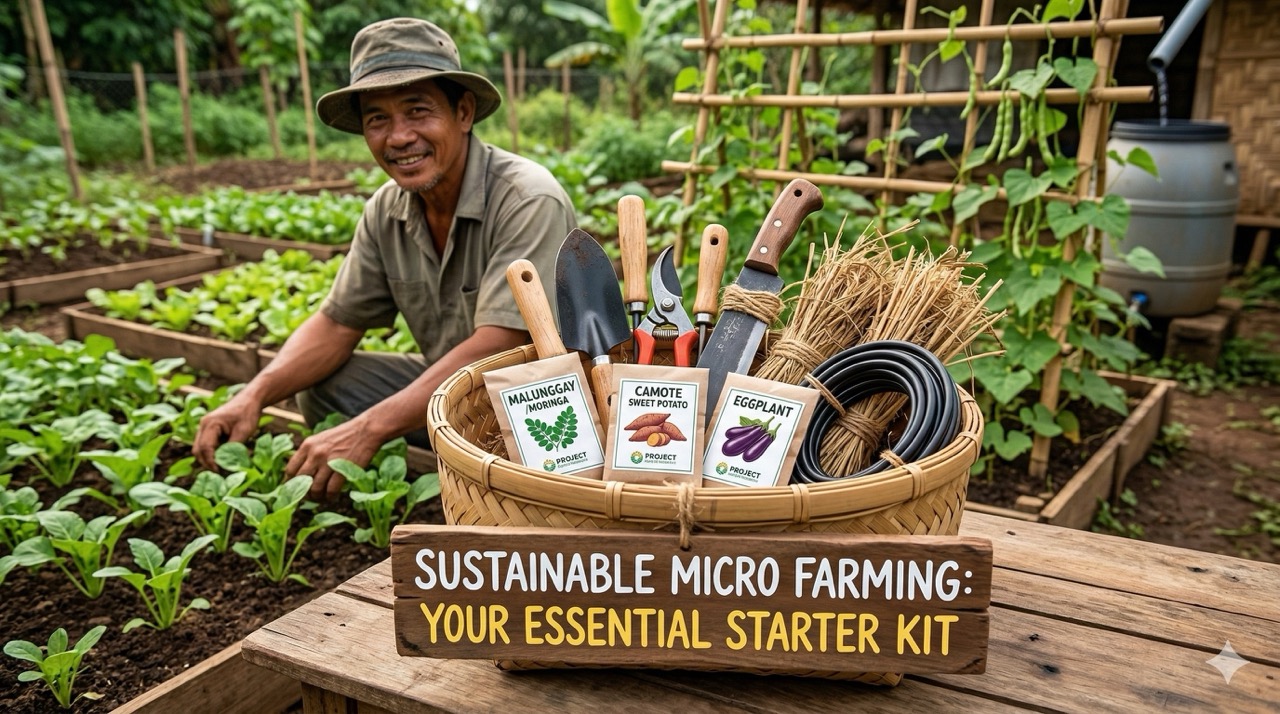
Starting a small farm doesn't require a large investment or heavy machinery. In rural areas, the goal is to create a closed-loop system that provides food security while protecting the soil.
This guide outlines the four pillars of a successful micro-farming starter kit.
1. The Living Soil (The Foundation)
Healthy soil is your most valuable asset. Instead of expensive chemical fertilizers, focus on:
-
Compost Bin: A simple wooden or bamboo crate for kitchen scraps and garden waste.
-
Mulch Material: Dried leaves or rice husks to keep the moisture in the ground.
-
Bio-Fertilizer: Homemade concoctions like Fish Amino Acids (FAA).
2. Water Management
In tropical climates, water is either too much or too little. Your kit should include:
-
Rainwater Collection: A simple barrel or tank connected to your roof.
-
Drip Irrigation Pipes: To deliver water directly to the roots, saving up to 70% more water than manual watering.
-
Greywater Filter: A sand and gravel pit to reuse kitchen water for non-edible plants.
3. Tool Selection for Small Spaces
You don't need many tools, but you need the right ones. We recommend:
| Tool | Purpose | Benefit |
| Hand Trowel | Planting seedlings | Precision |
| Bolo/Machete | Clearing brush | Versatility |
| Pruning Shears | Maintaining health | Prevents disease |
Pro Tip: Keep your tools clean and oiled. In high-humidity areas like Negros or Cebu, rust is your biggest enemy!
4. The "Zero-Waste" Seed Bank
Start with crops that are "survivors." For the Philippines, these are excellent for beginners:
-
Malunggay (Moringa): The "miracle tree" that grows from cuttings.
-
Sweet Potato (Camote): Great ground cover and calorie source.
-
Eggplant & Okra: Resilient against heat.
Summary: Why Start Small?
Micro-farming is about resilience. By starting with a small kit, you learn the rhythm of your land without the financial risk of a large-scale operation.