<?xml version="1.0" encoding="utf-8"?>
<feed xmlns="http://www.w3.org/2005/Atom" xmlns:media="http://search.yahoo.com/mrss/">
    <title></title>
    <link href="https://deveelio.com/feed.xml" rel="self" />
    <link href="https://deveelio.com" />
    <updated>2026-03-11T11:16:03+08:00</updated>
    <author>
        <name>KJ</name>
    </author>
    <id>https://deveelio.com</id>

    <entry>
        <title>Farming Smarter, Not Harder: Small-Scale Solar Irrigation for Sustainable Agriculture</title>
        <author>
            <name>KJ</name>
        </author>
        <link href="https://deveelio.com/farming-smarter-not-harder-small-scale-solar-irrigation-for-sustainable-agriculture/index.html"/>
        <id>https://deveelio.com/farming-smarter-not-harder-small-scale-solar-irrigation-for-sustainable-agriculture/index.html</id>
        <media:content url="https://deveelio.com/media/posts/13/Gross-pic04.jpeg" medium="image" />
            <category term="blog"/>

        <updated>2026-03-06T11:28:10+08:00</updated>
            <summary type="html">
                <![CDATA[
                        <img src="https://deveelio.com/media/posts/13/Gross-pic04.jpeg" alt="The Water Challenge in the Philippines" />
                    Introduction: The Water Challenge in the Philippines Water scarcity is an ever-present challenge for smallholder farmers in the Philippines. The&hellip;
                ]]>
            </summary>
        <content type="html">
            <![CDATA[
                    <p><img src="https://deveelio.com/media/posts/13/Gross-pic04.jpeg" class="type:primaryImage" alt="The Water Challenge in the Philippines" /></p>
                <p data-path-to-node="1"><strong data-path-to-node="1" data-index-in-node="0">Introduction: The Water Challenge in the Philippines</strong></p>
<p data-path-to-node="2">Water scarcity is an ever-present challenge for smallholder farmers in the Philippines. The El Niño phenomenon, characterized by reduced rainfall and prolonged dry spells, significantly impacts agricultural productivity, often leading to crop failures and financial losses. Access to reliable water sources is crucial, but traditional irrigation methods can be expensive and labor-intensive, especially for remote or smaller farms.</p>
<p data-path-to-node="3"><strong data-path-to-node="3" data-index-in-node="0">The Solar Solution: Powering Irrigation Sustainably</strong></p>
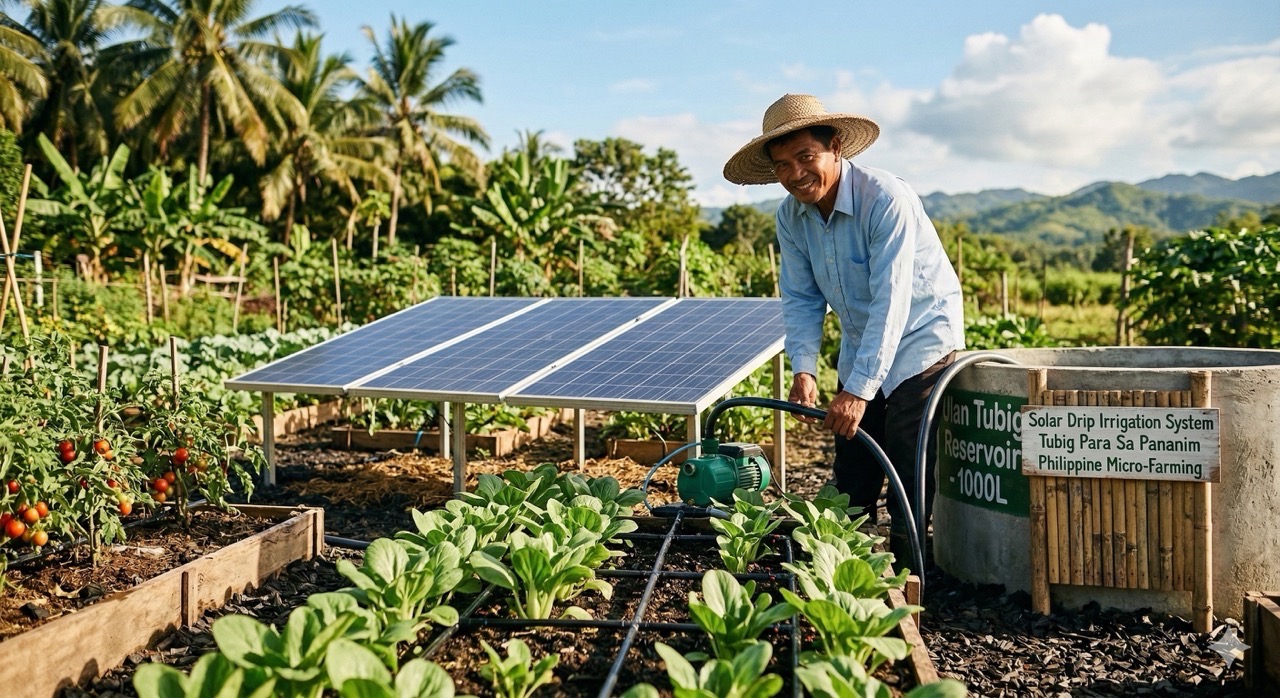
<p data-path-to-node="4">Small-scale solar-powered irrigation systems (SPIS) offer a sustainable and cost-effective solution for small-scale farmers. These systems utilize solar panels to convert sunlight into electricity, powering pumps that draw water from wells, rivers, or reservoirs and distribute it to crops. This technology reduces reliance on fossil fuels, lowers operating costs, and ensures a consistent water supply even in off-grid areas.</p>
<p data-path-to-node="5"><strong data-path-to-node="5" data-index-in-node="0">Benefits of Small-Scale Solar Irrigation:</strong></p>
<ul data-path-to-node="6">
<li>
<p data-path-to-node="6,0,0"><strong data-path-to-node="6,0,0" data-index-in-node="0">Reduced Operating Costs:</strong> Unlike diesel or gasoline pumps, solar-powered systems require minimal energy inputs, leading to significant savings on fuel and maintenance.</p>
</li>
<li>
<p data-path-to-node="6,1,0"><strong data-path-to-node="6,1,0" data-index-in-node="0">Climate Resilience:</strong> Solar irrigation provides a reliable water source during dry periods, helping farmers mitigate the impact of drought and ensuring crop survival.</p>
</li>
<li>
<p data-path-to-node="6,2,0"><strong data-path-to-node="6,2,0" data-index-in-node="0">Increased Productivity:</strong> Consistent watering enables farmers to grow multiple crops throughout the year, maximizing land use and increasing yields.</p>
</li>
<li>
<p data-path-to-node="6,3,0"><strong data-path-to-node="6,3,0" data-index-in-node="0">Environmentally Friendly:</strong> Solar energy is a clean and renewable resource, reducing greenhouse gas emissions and contributing to sustainable agricultural practices.</p>
</li>
</ul>
<p data-path-to-node="7"><strong data-path-to-node="7" data-index-in-node="0">Rainwater Harvesting: Capturing Nature's Bounty</strong></p>
<p data-path-to-node="8">Rainwater harvesting (RWH) involves collecting and storing rainwater from rooftops, land surfaces, or rock catchments for later use. This ancient practice is making a comeback as a vital strategy for water management, especially in areas with seasonal rainfall. RWH provides a supplementary water source for irrigation, reducing reliance on groundwater and improving water security.</p>
<p data-path-to-node="9"><strong data-path-to-node="9" data-index-in-node="0">Benefits of Rainwater Harvesting:</strong></p>
<ul data-path-to-node="10">
<li>
<p data-path-to-node="10,0,0"><strong data-path-to-node="10,0,0" data-index-in-node="0">Low-Cost and Sustainable:</strong> RWH systems are relatively inexpensive to install and maintain, making them accessible to smallholder farmers.</p>
</li>
<li>
<p data-path-to-node="10,1,0"><strong data-path-to-node="10,1,0" data-index-in-node="0">Improved Water Quality:</strong> Rainwater is generally clean and free of pollutants, making it suitable for irrigation.</p>
</li>
<li>
<p data-path-to-node="10,2,0"><strong data-path-to-node="10,2,0" data-index-in-node="0">Reduced Soil Erosion:</strong> Capturing rainwater before it flows off the land helps prevent soil erosion and improve soil moisture.</p>
</li>
</ul>
<p data-path-to-node="11"><strong data-path-to-node="11" data-index-in-node="0">Drip Irrigation: Precision Watering for Maximum Efficiency</strong></p>
<p data-path-to-node="12">Drip irrigation is a highly efficient irrigation method that delivers water directly to the root zone of plants through a network of tubes and emitters. This precise application minimizes water loss through evaporation and runoff, ensuring that crops receive the exact amount of water they need. Drip systems can be easily integrated with solar-powered pumps, creating a synergistic solution for sustainable irrigation.</p>
<p data-path-to-node="13"><strong data-path-to-node="13" data-index-in-node="0">Benefits of Drip Irrigation:</strong></p>
<ul data-path-to-node="14">
<li>
<p data-path-to-node="14,0,0"><strong data-path-to-node="14,0,0" data-index-in-node="0">Water Conservation:</strong> Drip irrigation can reduce water usage by up to 70% compared to traditional surface irrigation methods.</p>
</li>
<li>
<p data-path-to-node="14,1,0"><strong data-path-to-node="14,1,0" data-index-in-node="0">Improved Crop Quality and Yield:</strong> Precise watering promotes healthy plant growth and can lead to increased yields and better crop quality.</p>
</li>
<li>
<p data-path-to-node="14,2,0"><strong data-path-to-node="14,2,0" data-index-in-node="0">Fertilizer Efficiency:</strong> Drip systems can be used to apply fertilizers directly to the root zone, reducing nutrient leaching and improving fertilizer efficiency.</p>
</li>
</ul>
<p data-path-to-node="15"><strong data-path-to-node="15" data-index-in-node="0">Conclusion: Empowering Farmers Through Sustainable Water Management</strong></p>
<p data-path-to-node="16">Small-scale solar irrigation, rainwater harvesting, and drip systems are powerful tools for smallholder farmers in the Philippines to manage water resources sustainably and build resilience to climate change. By adopting these technologies, farmers can reduce operating costs, increase productivity, and secure their livelihoods. Government initiatives, non-governmental organizations, and private sector investments play a crucial role in promoting the adoption of these sustainable water management practices and empowering farmers to achieve agricultural prosperity.</p>
            ]]>
        </content>
    </entry>
    <entry>
        <title>Ginataang Bilo-Bilo: A Sweet Symphony of Texture and Tradition</title>
        <author>
            <name>KJ</name>
        </author>
        <link href="https://deveelio.com/ginataang-bilo-bilo-a-sweet-symphony-of-texture-and-tradition/index.html"/>
        <id>https://deveelio.com/ginataang-bilo-bilo-a-sweet-symphony-of-texture-and-tradition/index.html</id>
        <media:content url="https://deveelio.com/media/posts/12/Gross-pic05.jpeg" medium="image" />
            <category term="blog"/>

        <updated>2026-03-05T17:53:12+08:00</updated>
            <summary type="html">
                <![CDATA[
                        <img src="https://deveelio.com/media/posts/12/Gross-pic05.jpeg" alt="" />
                    Bukid Ahona There is a specific kind of magic that happens in a Filipino kitchen when the scent of coconut&hellip;
                ]]>
            </summary>
        <content type="html">
            <![CDATA[
                    <p><img src="https://deveelio.com/media/posts/12/Gross-pic05.jpeg" class="type:primaryImage" alt="" /></p>
                <h3 data-path-to-node="1">Bukid Ahona</h3>
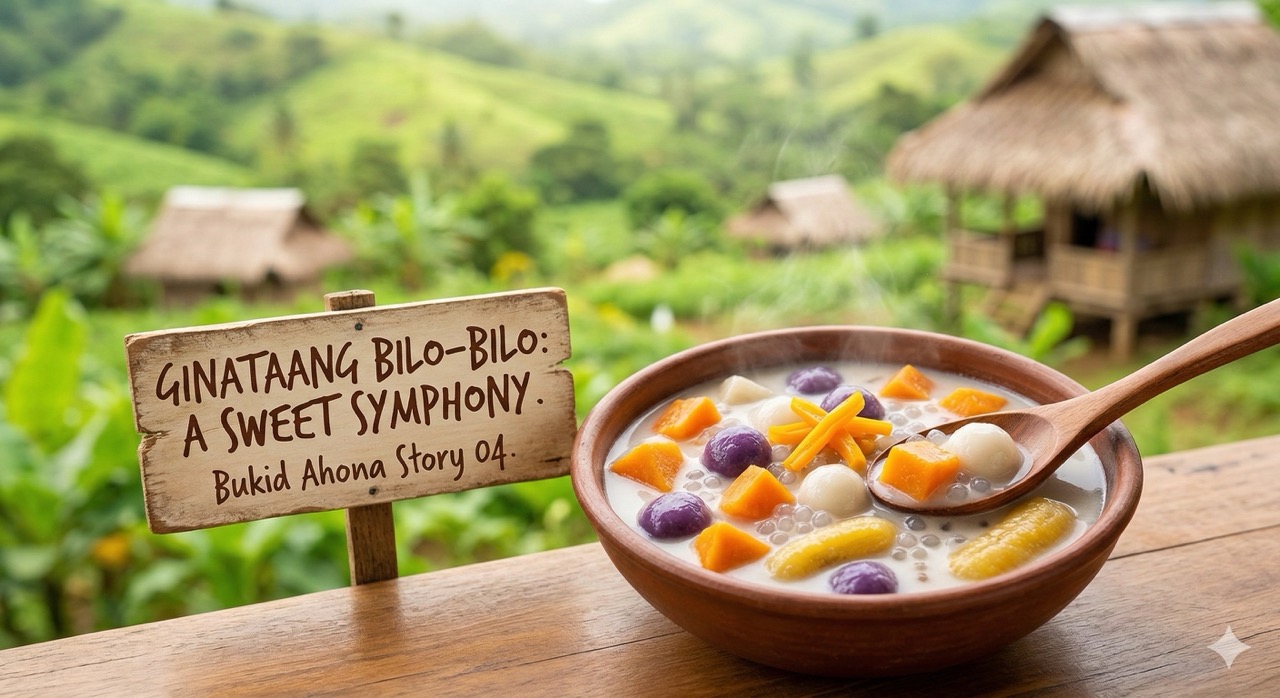
<p data-path-to-node="2">There is a specific kind of magic that happens in a Filipino kitchen when the scent of coconut milk begins to simmer. In our latest chapter at <strong data-path-to-node="2" data-index-in-node="143">Bukid Ahona</strong>, we explore a dish that is more than just a dessert—it is a celebration of "sticky" family bonds and the vibrant colors of the islands: <strong data-path-to-node="2" data-index-in-node="291">Ginataang Bilo-Bilo</strong>.</p>
<p data-path-to-node="3">The name itself tells a story. <i data-path-to-node="3" data-index-in-node="31">Ginataang</i> means "cooked in coconut milk," and <i data-path-to-node="3" data-index-in-node="77">Bilo-bilo</i> refers to the chewy, hand-rolled glutinous rice balls that dance in the pot. It’s a warm, comforting bowl of textures, ranging from the softness of cooked tubers to the slight crunch of jackfruit.</p>
<hr data-path-to-node="4">
<h3 data-path-to-node="5">The Heart of the Dish: Ingredients</h3>
<p data-path-to-node="6">To make a truly authentic Ginataang Bilo-Bilo, you need a harmony of land and sea (coconut). Here is what you’ll need:</p>
<table data-path-to-node="7">
<thead>
<tr>
<td><strong>Ingredient</strong></td>
<td><strong>Role</strong></td>
</tr>
</thead>
<tbody>
<tr>
<td><span data-path-to-node="7,1,0,0"><strong data-path-to-node="7,1,0,0" data-index-in-node="0">Glutinous Rice Flour</strong></span></td>
<td><span data-path-to-node="7,1,1,0">The base for the chewy <i data-path-to-node="7,1,1,0" data-index-in-node="23">bilo-bilo</i> balls.</span></td>
</tr>
<tr>
<td><span data-path-to-node="7,2,0,0"><strong data-path-to-node="7,2,0,0" data-index-in-node="0">Coconut Milk &amp; Cream</strong></span></td>
<td><span data-path-to-node="7,2,1,0">The rich, silky broth.</span></td>
</tr>
<tr>
<td><span data-path-to-node="7,3,0,0"><strong data-path-to-node="7,3,0,0" data-index-in-node="0">Saba Bananas</strong></span></td>
<td><span data-path-to-node="7,3,1,0">Adds a distinct, honey-like sweetness.</span></td>
</tr>
<tr>
<td><span data-path-to-node="7,4,0,0"><strong data-path-to-node="7,4,0,0" data-index-in-node="0">Kamote (Sweet Potato)</strong></span></td>
<td><span data-path-to-node="7,4,1,0">Provides a soft, earthy texture.</span></td>
</tr>
<tr>
<td><span data-path-to-node="7,5,0,0"><strong data-path-to-node="7,5,0,0" data-index-in-node="0">Gabi (Taro)</strong></span></td>
<td><span data-path-to-node="7,5,1,0">Adds thickness and a nutty undertone.</span></td>
</tr>
<tr>
<td><span data-path-to-node="7,6,0,0"><strong data-path-to-node="7,6,0,0" data-index-in-node="0">Langka (Jackfruit)</strong></span></td>
<td><span data-path-to-node="7,6,1,0">The aromatic "soul" of the dish.</span></td>
</tr>
<tr>
<td><span data-path-to-node="7,7,0,0"><strong data-path-to-node="7,7,0,0" data-index-in-node="0">Tapioca Pearls (Sago)</strong></span></td>
<td><span data-path-to-node="7,7,1,0">For extra "pop" and texture.</span></td>
</tr>
</tbody>
</table>
<hr data-path-to-node="8">
<h3 data-path-to-node="9">Step-by-Step: Bringing Bukid Ahona to Your Table</h3>
<h4 data-path-to-node="10">1. Crafting the Bilo-Bilo</h4>
<p data-path-to-node="11">Mix glutinous rice flour with a small amount of water until it forms a dough. Roll them into small, marble-sized balls. <strong data-path-to-node="11" data-index-in-node="120">Pro-tip:</strong> Keep them small! They expand slightly when cooked and are much easier to eat in one bite.</p>
<h4 data-path-to-node="12">2. The Coconut Base</h4>
<p data-path-to-node="13">In a large pot, simmer coconut milk with a bit of water and sugar. The secret is to keep the heat medium-low—you want to infuse the flavors without curdling the milk.</p>
<h4 data-path-to-node="14">3. Adding the "Hard" Ingredients</h4>
<p data-path-to-node="15">Drop in your cubed taro (<i data-path-to-node="15" data-index-in-node="25">gabi</i>) and sweet potatoes (<i data-path-to-node="15" data-index-in-node="51">kamote</i>) first. These take the longest to soften. Once they are halfway cooked, add the saba bananas and the jackfruit.</p>
<h4 data-path-to-node="16">4. The Grand Entrance</h4>
<p data-path-to-node="17">Gently drop the rice balls into the simmering mixture. You’ll know they are ready when they rise to the surface, bobbing like little white clouds. This is also the time to add your pre-cooked tapioca pearls.</p>
<h4 data-path-to-node="18">5. The Finishing Touch</h4>
<p data-path-to-node="19">Pour in the coconut cream (<i data-path-to-node="19" data-index-in-node="27">kakang gata</i>) for that final layer of richness. Let it simmer for another 2–3 minutes until the sauce has thickened into a creamy nectar.</p>
<hr data-path-to-node="20">
<h3 data-path-to-node="21">Why We Love It at Bukid Ahona</h3>
<p data-path-to-node="22">In the Philippines, Ginataang Bilo-Bilo is often served during <i data-path-to-node="22" data-index-in-node="63">merienda</i> (afternoon snack) or during rainy afternoons. At <strong data-path-to-node="22" data-index-in-node="121">Bukid Ahona</strong>, we believe this dish represents the best of Filipino hospitality—it’s meant to be shared from a big pot, steaming hot, with plenty of laughter on the side.</p>
<p data-path-to-node="23">Whether you are using crops from your own backyard or sourcing them from the local market, the key is patience. Rolling each <i data-path-to-node="23" data-index-in-node="125">bilo-bilo</i> by hand is a meditative process that makes the first bite all the more rewarding.</p>
            ]]>
        </content>
    </entry>
    <entry>
        <title>Sustainable Micro Farming Starter Kit</title>
        <author>
            <name>KJ</name>
        </author>
        <link href="https://deveelio.com/sustainable-micro-farming-starter-kit/index.html"/>
        <id>https://deveelio.com/sustainable-micro-farming-starter-kit/index.html</id>
        <media:content url="https://deveelio.com/media/posts/11/Gross-pic02.jpeg" medium="image" />
            <category term="blog"/>

        <updated>2026-03-05T15:07:36+08:00</updated>
            <summary type="html">
                <![CDATA[
                        <img src="https://deveelio.com/media/posts/11/Gross-pic02.jpeg" alt="Blog Post 3" />
                    Starting a small farm doesn't require a large investment or heavy machinery. In rural areas, the goal is to create&hellip;
                ]]>
            </summary>
        <content type="html">
            <![CDATA[
                    <p><img src="https://deveelio.com/media/posts/11/Gross-pic02.jpeg" class="type:primaryImage" alt="Blog Post 3" /></p>
                <p data-path-to-node="4">Starting a small farm doesn't require a large investment or heavy machinery. In rural areas, the goal is to create a <strong data-path-to-node="4" data-index-in-node="117">closed-loop system</strong> that provides food security while protecting the soil.</p>
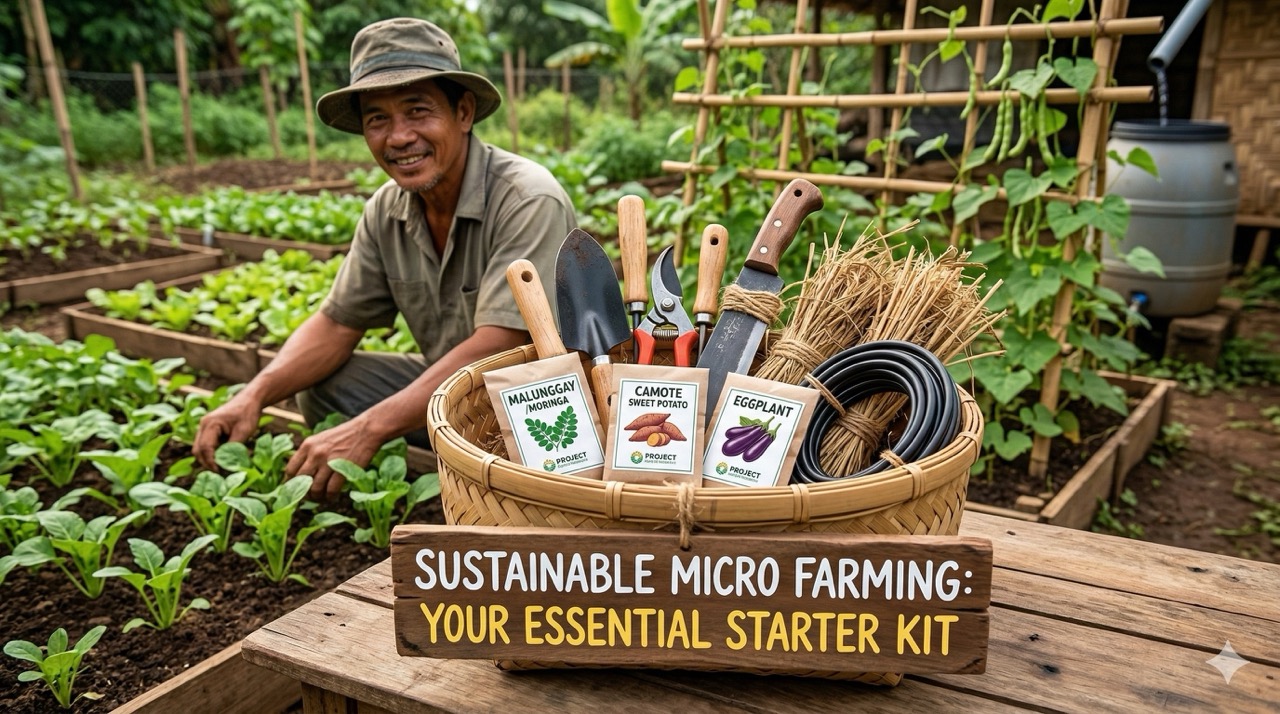
<p data-path-to-node="5">This guide outlines the four pillars of a successful micro-farming starter kit.</p>
<hr data-path-to-node="6">
<h2 data-path-to-node="7">1. The Living Soil (The Foundation)</h2>
<p data-path-to-node="8">Healthy soil is your most valuable asset. Instead of expensive chemical fertilizers, focus on:</p>
<ul data-path-to-node="9">
<li>
<p data-path-to-node="9,0,0"><strong data-path-to-node="9,0,0" data-index-in-node="0">Compost Bin:</strong> A simple wooden or bamboo crate for kitchen scraps and garden waste.</p>
</li>
<li>
<p data-path-to-node="9,1,0"><strong data-path-to-node="9,1,0" data-index-in-node="0">Mulch Material:</strong> Dried leaves or rice husks to keep the moisture in the ground.</p>
</li>
<li>
<p data-path-to-node="9,2,0"><strong data-path-to-node="9,2,0" data-index-in-node="0">Bio-Fertilizer:</strong> Homemade concoctions like Fish Amino Acids (FAA).</p>
</li>
</ul>
<h2 data-path-to-node="10">2. Water Management</h2>
<p data-path-to-node="11">In tropical climates, water is either too much or too little. Your kit should include:</p>
<ol start="1" data-path-to-node="12">
<li>
<p data-path-to-node="12,0,0"><strong data-path-to-node="12,0,0" data-index-in-node="0">Rainwater Collection:</strong> A simple barrel or tank connected to your roof.</p>
</li>
<li>
<p data-path-to-node="12,1,0"><strong data-path-to-node="12,1,0" data-index-in-node="0">Drip Irrigation Pipes:</strong> To deliver water directly to the roots, saving up to <strong data-path-to-node="12,1,0" data-index-in-node="76">70%</strong> more water than manual watering.</p>
</li>
<li>
<p data-path-to-node="12,2,0"><strong data-path-to-node="12,2,0" data-index-in-node="0">Greywater Filter:</strong> A sand and gravel pit to reuse kitchen water for non-edible plants.</p>
</li>
</ol>
<hr data-path-to-node="13">
<h2 data-path-to-node="14">3. Tool Selection for Small Spaces</h2>
<p data-path-to-node="15">You don't need many tools, but you need the <i data-path-to-node="15" data-index-in-node="44">right</i> ones. We recommend:</p>
<table data-path-to-node="16">
<thead>
<tr>
<td><strong>Tool</strong></td>
<td><strong>Purpose</strong></td>
<td><strong>Benefit</strong></td>
</tr>
</thead>
<tbody>
<tr>
<td><span data-path-to-node="16,1,0,0"><strong data-path-to-node="16,1,0,0" data-index-in-node="0">Hand Trowel</strong></span></td>
<td><span data-path-to-node="16,1,1,0">Planting seedlings</span></td>
<td><span data-path-to-node="16,1,2,0">Precision</span></td>
</tr>
<tr>
<td><span data-path-to-node="16,2,0,0"><strong data-path-to-node="16,2,0,0" data-index-in-node="0">Bolo/Machete</strong></span></td>
<td><span data-path-to-node="16,2,1,0">Clearing brush</span></td>
<td><span data-path-to-node="16,2,2,0">Versatility</span></td>
</tr>
<tr>
<td><span data-path-to-node="16,3,0,0"><strong data-path-to-node="16,3,0,0" data-index-in-node="0">Pruning Shears</strong></span></td>
<td><span data-path-to-node="16,3,1,0">Maintaining health</span></td>
<td><span data-path-to-node="16,3,2,0">Prevents disease</span></td>
</tr>
</tbody>
</table>
<blockquote data-path-to-node="17">
<p data-path-to-node="17,0"><strong data-path-to-node="17,0" data-index-in-node="0">Pro Tip:</strong> Keep your tools clean and oiled. In high-humidity areas like Negros or Cebu, rust is your biggest enemy!</p>
</blockquote>
<hr data-path-to-node="18">
<h2 data-path-to-node="19">4. The "Zero-Waste" Seed Bank</h2>
<p data-path-to-node="20">Start with crops that are "survivors." For the Philippines, these are excellent for beginners:</p>
<ul data-path-to-node="21">
<li>
<p data-path-to-node="21,0,0"><strong data-path-to-node="21,0,0" data-index-in-node="0">Malunggay (Moringa):</strong> The "miracle tree" that grows from cuttings.</p>
</li>
<li>
<p data-path-to-node="21,1,0"><strong data-path-to-node="21,1,0" data-index-in-node="0">Sweet Potato (Camote):</strong> Great ground cover and calorie source.</p>
</li>
<li>
<p data-path-to-node="21,2,0"><strong data-path-to-node="21,2,0" data-index-in-node="0">Eggplant &amp; Okra:</strong> Resilient against heat.</p>
</li>
</ul>
<h3 data-path-to-node="22">Summary: Why Start Small?</h3>
<p data-path-to-node="23">Micro-farming is about <strong data-path-to-node="23" data-index-in-node="23">resilience</strong>. By starting with a small kit, you learn the rhythm of your land without the financial risk of a large-scale operation.</p>
            ]]>
        </content>
    </entry>
</feed>