Farming Smarter, Not Harder: Small-Scale Solar Irrigation for Sustainable Agriculture
Introduction: The Water Challenge in the Philippines
Water scarcity is an ever-present challenge for smallholder farmers in the Philippines. The El Niño phenomenon, characterized by reduced rainfall and prolonged dry spells, significantly impacts agricultural productivity, often leading to crop failures and financial losses. Access to reliable water sources is crucial, but traditional irrigation methods can be expensive and labor-intensive, especially for remote or smaller farms.
The Solar Solution: Powering Irrigation Sustainably
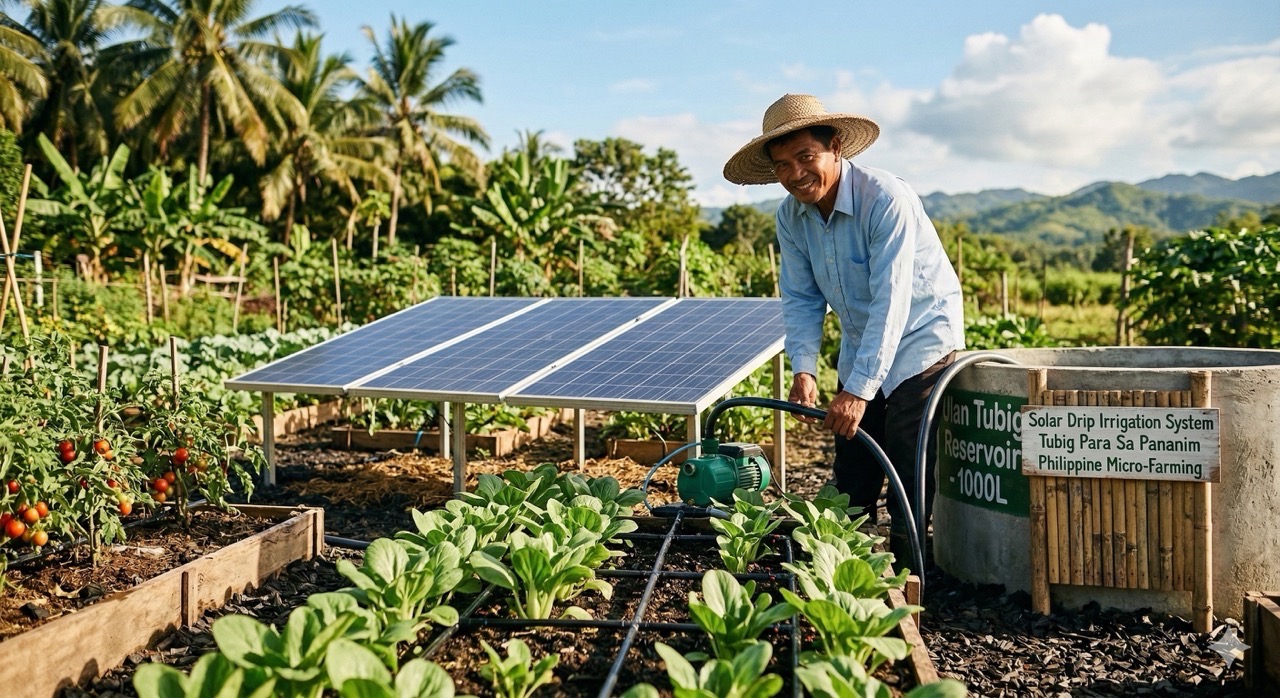
Small-scale solar-powered irrigation systems (SPIS) offer a sustainable and cost-effective solution for small-scale farmers. These systems utilize solar panels to convert sunlight into electricity, powering pumps that draw water from wells, rivers, or reservoirs and distribute it to crops. This technology reduces reliance on fossil fuels, lowers operating costs, and ensures a consistent water supply even in off-grid areas.
Benefits of Small-Scale Solar Irrigation:
-
Reduced Operating Costs: Unlike diesel or gasoline pumps, solar-powered systems require minimal energy inputs, leading to significant savings on fuel and maintenance.
-
Climate Resilience: Solar irrigation provides a reliable water source during dry periods, helping farmers mitigate the impact of drought and ensuring crop survival.
-
Increased Productivity: Consistent watering enables farmers to grow multiple crops throughout the year, maximizing land use and increasing yields.
-
Environmentally Friendly: Solar energy is a clean and renewable resource, reducing greenhouse gas emissions and contributing to sustainable agricultural practices.
Rainwater Harvesting: Capturing Nature's Bounty
Rainwater harvesting (RWH) involves collecting and storing rainwater from rooftops, land surfaces, or rock catchments for later use. This ancient practice is making a comeback as a vital strategy for water management, especially in areas with seasonal rainfall. RWH provides a supplementary water source for irrigation, reducing reliance on groundwater and improving water security.
Benefits of Rainwater Harvesting:
-
Low-Cost and Sustainable: RWH systems are relatively inexpensive to install and maintain, making them accessible to smallholder farmers.
-
Improved Water Quality: Rainwater is generally clean and free of pollutants, making it suitable for irrigation.
-
Reduced Soil Erosion: Capturing rainwater before it flows off the land helps prevent soil erosion and improve soil moisture.
Drip Irrigation: Precision Watering for Maximum Efficiency
Drip irrigation is a highly efficient irrigation method that delivers water directly to the root zone of plants through a network of tubes and emitters. This precise application minimizes water loss through evaporation and runoff, ensuring that crops receive the exact amount of water they need. Drip systems can be easily integrated with solar-powered pumps, creating a synergistic solution for sustainable irrigation.
Benefits of Drip Irrigation:
-
Water Conservation: Drip irrigation can reduce water usage by up to 70% compared to traditional surface irrigation methods.
-
Improved Crop Quality and Yield: Precise watering promotes healthy plant growth and can lead to increased yields and better crop quality.
-
Fertilizer Efficiency: Drip systems can be used to apply fertilizers directly to the root zone, reducing nutrient leaching and improving fertilizer efficiency.
Conclusion: Empowering Farmers Through Sustainable Water Management
Small-scale solar irrigation, rainwater harvesting, and drip systems are powerful tools for smallholder farmers in the Philippines to manage water resources sustainably and build resilience to climate change. By adopting these technologies, farmers can reduce operating costs, increase productivity, and secure their livelihoods. Government initiatives, non-governmental organizations, and private sector investments play a crucial role in promoting the adoption of these sustainable water management practices and empowering farmers to achieve agricultural prosperity.